India’s Cockroach Janta Party pressured the education minister to resign after nationwide protests over a leaked medical entrance examination. Attempts to connect the movement to Bangladesh’s Jamaat-e-Islami reveal how a domestic uprising can quickly become shorthand for foreign-backed regime change.
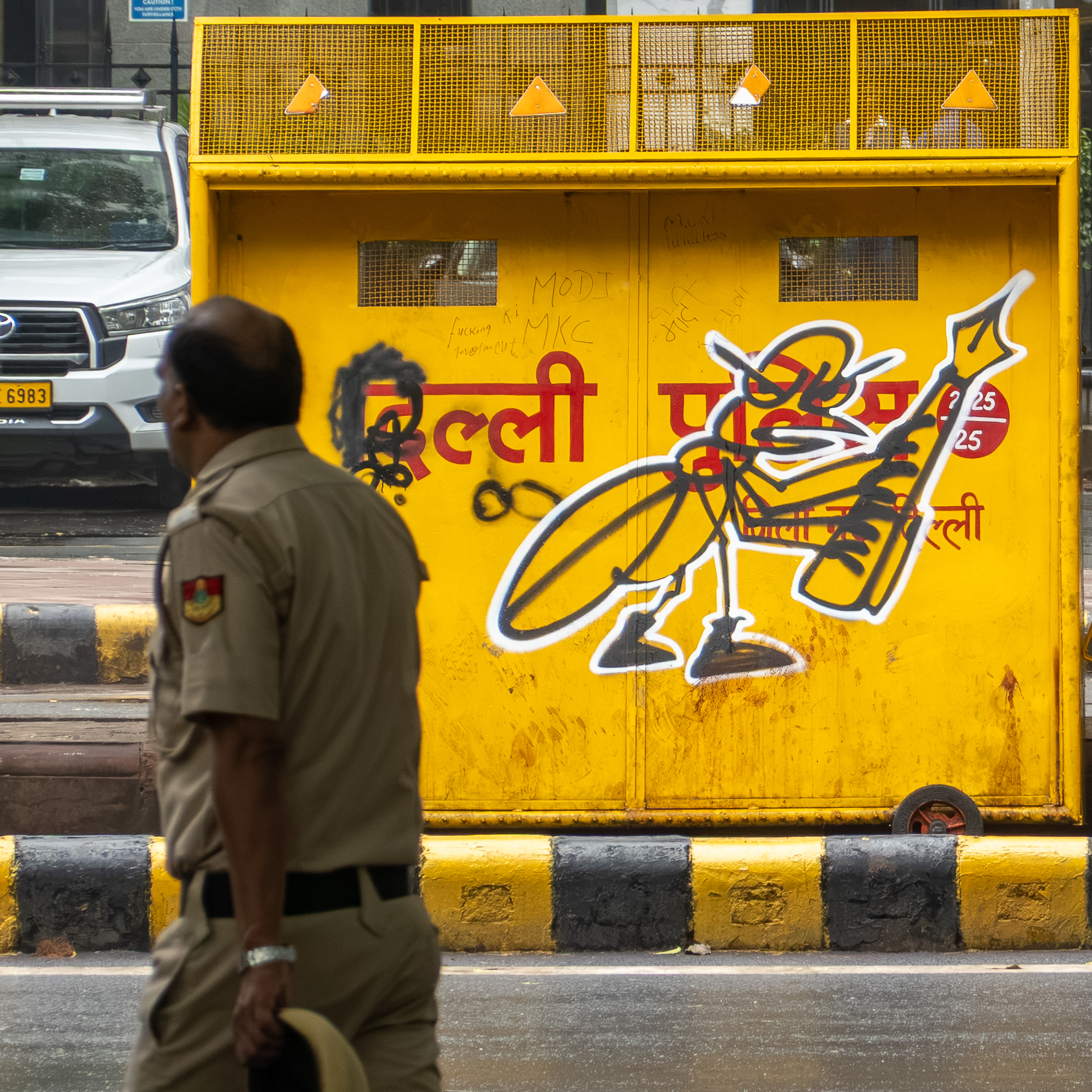
On 25 July, India’s Education Minister Dharmendra Pradhan resigned after weeks of pressure from the youth-led Cockroach Janta Party (CJP). The movement had grown from protests over a leaked medical entrance examination, taken by roughly two million students, into the largest youth-led challenge Prime Minister Narendra Modi had faced since taking office in 2014. Two days later, the government introduced legislation promising tougher action against examination fraud. Pradhan said he was stepping aside partly to prevent “anti-national forces” from exploiting the unrest.
The resignation was a rare concession and an unmistakable victory for a movement that originally started as online satire. However, one aspect of the response deserves attention beyond the context of India, that is the effort to explain a domestic accountability protest as foreign-backed regime change, more specifically, from Bangladesh.
From Examination Protest to Foreign Plot
At the height of the demonstrations, a letter purportedly issued by Bangladesh Jamaat-e-Islami circulated online, claiming that the party supported the CJP. Indian news channels such as Republic TV, News18 and NewsX amplified the document. Alt News later identified spelling errors, a mismatched logo and the absence of any corresponding release on Jamaat’s official channels, concluding that the letter was fabricated and probably generated with artificial intelligence. More notably, Jamaat-e-Islami officials have publicly denied ever issuing it.
A second claim used a cropped video to suggest that CJP supporters were raising exclusively Islamic slogans. BOOM Fact Check examined the longer recording and found that it contained slogans associated with several faiths and a message of unity. The edit had removed the context needed to turn a commitment to pluralism into evidence of Islamist mobilisation.
The narrative became sharper in West Bengal. A CJP solidarity rally in Kolkata, later joined by Left organisations, ended in clashes involving police, journalists and some participants. West Bengal Chief Minister Suvendu Adhikari distinguished the CJP and genuine student protesters from the violence, but blamed “foreign-funded Jamatis” and “Jamati fundamentalists” for the attacks. At that stage, investigators had not established foreign sponsorship. The language nevertheless connected disorder, Muslim identity, Bangladesh’s border and external subversion.
Why Bangladesh Became the Metaphor
Why did Bangladesh provide such a ready political vocabulary for Indian media sources? Since the uprising of July-August 2024, the country has acquired a second meaning in sections of Indian political discourse. It is not only a neighbouring state whose long-serving prime minister fled after a student-led revolt. It has become a cautionary script: a limited grievance expands, repression produces wider mobilisation, an apparently durable government loses legitimacy, and political forces believed to have been permanently marginalised return to public life.
Indian media coverage after Sheikh Hasina’s fall frequently portrayed the upheaval as an Islamist takeover assisted by Pakistan or China. Some outlets also circulated exaggerated or false claims about attacks on Hindus. While there were genuine assaults on minorities that demanded investigation and protection, the mixture of real violence, misinformation and geopolitical speculation encouraged an interpretation in which the popular uprising itself became inseparable from Islamist conspiracy.
Bangladesh’s February 2026 election reinforced that anxiety. The Bangladesh Nationalist Party won 209 parliamentary seats, while Jamaat secured 68 and became the principal opposition force. Indian commentary paid particular attention to Jamaat victories in districts adjoining West Bengal, Assam and Meghalaya. When the CJP protests intensified, invoking Bangladesh therefore suggested more than the regional spread of youth unrest. It implied that an Islamist or foreign actor might be concealed behind demands for examination accountability.
The Political Afterlife of Repression
West Bengal adds historical resonance. The Left Front governed the state for 34 years from 1977 to 2011, showing how a movement-based opposition can become an enduring political establishment. The Bharatiya Janata Party (BJP) itself took power there only in May 2026, ending 15 years of Trinamool Congress rule. This does not establish that Indian leaders expect Jamaat to reproduce Bengal’s communist trajectory. A more defensible inference might be that dominant political establishments fear the afterlife of repression, where organisations that have been treated as defeated causes can acquire new legitimacy when the order that excluded them begins to collapse or show vulnerabilities.
That fear can become self-defeating. Islamist labels do not explain why the CJP found support among students, graduates and families frustrated by repeated examination failures, job insecurity and police action. The movement maintained a specific demand, forced a ministerial resignation and secured commitments to institutional reform. The fabricated Jamaat letter revealed less about the protesters than about the anxieties of those attempting to contain them.
What Indo-Pacific Partners Should Notice
For Australia and other Indo-Pacific partners, the lesson is to treat India’s strategic image as a stable democratic counterweight to China with care. Domestic narratives about dissent, religion and neighbouring states influence regional trust. When Bangladesh becomes a warning label rather than a country undergoing its own complicated political transition, misperception travels in both directions.
The CJP’s victory was neither a Bangladesh-backed regime change nor an Islamist breakthrough. It was a domestic movement for accountability. The fact that some pro-government actors reached for Bangladesh and Jamaat to discredit it shows how deeply the 2024 uprising has altered South Asia’s political imagination. Governments can police borders, but they cannot easily contain the cautionary power of a neighbouring revolt.
Wayej Kuruni is a Bangladeshi sociologist and political analyst based in Türkiye. His work focuses on South Asian politics, political Islam, secularism, student movements, and media narratives. His commentary has appeared in Daily Sabah, Politics Today, Türkiye Today, New Age, Fikir Turu, and Perspektif.
This article is published under a Creative Commons License and may be republished with attribution.