Stories of past disasters help prevent complacency. When survivors recount their experiences and how events unfolded, they keep the memory of the disaster alive long after the landscape has changed.
Fifteen years after the 2011 Tōhoku earthquake, structural remains of Okawa Elementary School still stand. With the building’s walls and windows gone, chalkboards and chairs can be seen as you walk through the site. What remains of the school is a physical reminder of the 74 children and 10 teachers who passed away from the tsunami that destroyed Ishinomaki. The decision to preserve the ruins, however, was controversial.
Understandably, some affected families wanted the remains demolished, feeling that the site carries painful memories. The area surrounding Okawa Elementary School is quiet and sombre, as residents are no longer allowed to live there due to its vulnerability to natural disasters.
As a 2026 Indo-Pacific Cooperation Network (IPCN) Fellow, I had the opportunity to travel to Japan to learn about the country’s natural disaster preparedness strategies, explore areas impacted, and meet with communities directly affected. Now in its third year, the IPCN is organised by the Japan Foundation and the Australian Institute of International Affairs, and brings scholars from the Indo-Pacific together to research regional disaster resilience issues. This year’s program included study tours to Japan, Fiji, New Zealand, and Australia to engage with experts, communities, policymakers, and practitioners working at the intersection of resilience, regional governance, and cross-border cooperation.
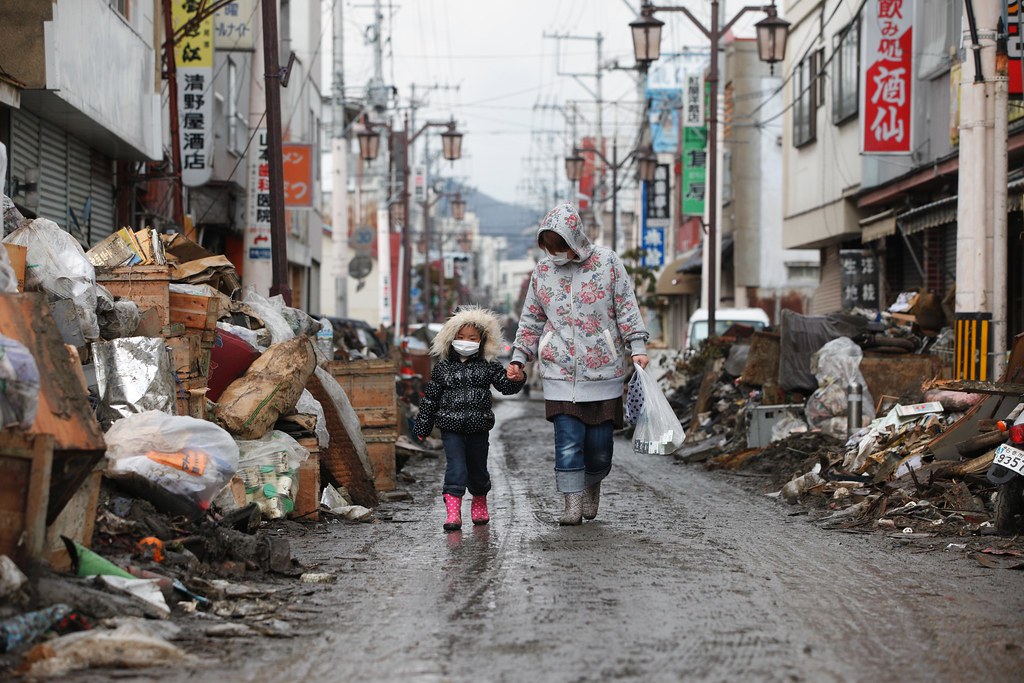
During the first part of the Japan study tour, we travelled to Ishinomaki, a town of around 140,000 that was affected by the 2011 Tōhoku earthquake and tsunami. It is commonly referred to as “3/11” as it struck on March 11th of that year, taking the lives of more than 18,000. While in Ishinomaki, we visited the ruins of Okawa Elementary School and met with those affected by 3/11. A lesson I have taken from this trip is that storytelling is an important part of disaster resilience as it prevents complacency, helps survivors process trauma, and transmits lessons across generations.
Why Memory Matters
Following natural disasters, communities rebuild homes, roads, and schools. While recovery is essential, the physical evidence of destruction disappears. Over time, it becomes more difficult to remember what happened and easier to forget the remaining risk. As new buildings replace those that were destroyed and daily life returns to normal, the disaster can begin to feel like a distant event rather than an ongoing possibility. This fading memory can lead to complacency, particularly for younger generations or new residents who did not experience the disaster themselves.
Stories of past disasters help prevent complacency. When survivors recount their experiences and how events unfolded, they keep the memory of the disaster alive long after the landscape has changed. These stories often carry details that statistics and reports cannot fully capture, such as how quickly events developed, what decisions people made in moments of uncertainty, and how communities responded to the crisis. By sharing these experiences, survivors help others understand both the reality of the disaster and the importance of remaining prepared for future risks.
Lived Experience and Emotional Resilience
During our time in Ishinomaki, we were joined by Japanese college students, including one who was from there and directly impacted by 3/11. In between meetings, the students shared their experiences during and after the earthquake and tsunami with me. They noted that despite Japanese society expecting people to keep their feelings inside and not share them with others, talking about their experiences has helped them cope. In addition to my conversation with the student, the other fellows and I met with other residents of Ishinomaki, including the president of a local business and a member of the local government at the time of 3/11. It was very powerful to hear from those who survived and listen to diverse perspectives on the horrific event.
As a result of these discussions, I have realised that while I am not a survivor myself, being able to cope with these experiences is also an important part of resilience. Survivors often carry grief, trauma, and losses long after the physical rebuilding has begun. Sharing their stories can help individuals process these experiences and make sense of what happened. In doing so, storytelling supports emotional recovery alongside physical recovery. When survivors can talk about their experiences, they can also share lessons learned. These personal accounts can inform preparedness efforts and ensure that knowledge gained through tragedy is not lost. Sharing stories also creates space for collective reflection and connection. When survivors talk about their experiences, they remind others that the disaster was not faced alone, which can strengthen community bonds.
From Memory to Preparedness
Physical infrastructure, such as the ruins of Okawa Elementary School, acts as a reminder of 3/11 for future generations. Storytelling can be a non-physical infrastructure that also serves as a knowledge-transfer mechanism, passing on what happened, what failed, and what helped people survive. Unlike physical infrastructure, it does not decay in the same way if it is actively told and retold. With natural disasters potentially occurring decades apart, entire generations may grow up without personally experiencing a major event. At the same time, many of those responsible for making critical decisions related to 3/11 are ageing, making the transmission of their stories and lessons learned even more urgent.
The stories I heard in Ishinomaki came from survivors across generations, ranging from their early twenties to their mid-seventies. Each generation holds a different relationship to 3/11, shaped by their age and experiences at the time of the disaster. Yet all of them convey emotions, lessons, and warnings that can help future generations better understand and prepare for similar events. In this way, disaster resilience is carried forward not only through archives or monuments but also through the continued sharing of lived experiences.
Disaster resilience is often understood in terms of physical measures such as seawalls, evacuation routes, and reinforced buildings. Yet storytelling plays a critical role in preserving lived experience, helping communities remain aware of risks even as landscapes and generations change. The stories shared by survivors in Ishinomaki demonstrate how disaster knowledge is carried forward through conversation and personal testimony. These narratives complement physical memorials, such as the remains of Okawa Elementary School, by ensuring that what happened is not lost over time. Listening to and sharing these stories is therefore not just a matter of remembrance; it is an active component of disaster preparedness and resilience.
John Augé is a member of the 2026 Indo-Pacific Cooperation Network. His research focuses on geopolitics, security, and climate change in the Indo-Pacific. He previously worked at the White House Council on Environmental Quality, the U.S.–Pacific Institute for Rising Leaders at the Johns Hopkins School of Advanced International Studies, and the Tuvalu Climate Action Network. He has participated in climate conferences across the Pacific and internationally, including the United Nations Framework Convention on Climate Change Conference of the Parties. He has been published in The Diplomat, writing on issues related to the Pacific Islands. He holds a Master of Arts in International Relations from the Johns Hopkins School of Advanced International Studies and a Bachelor of Arts in International Business and Finance from North Central College.
The authors of this article is a participant of the Indo-Pacific Cooperation Network, a study-tour research programme generously funded by the Japan Foundation. You can read more about the programme here.
This article is published under a Creative Commons Licence and may be republished with attribution.