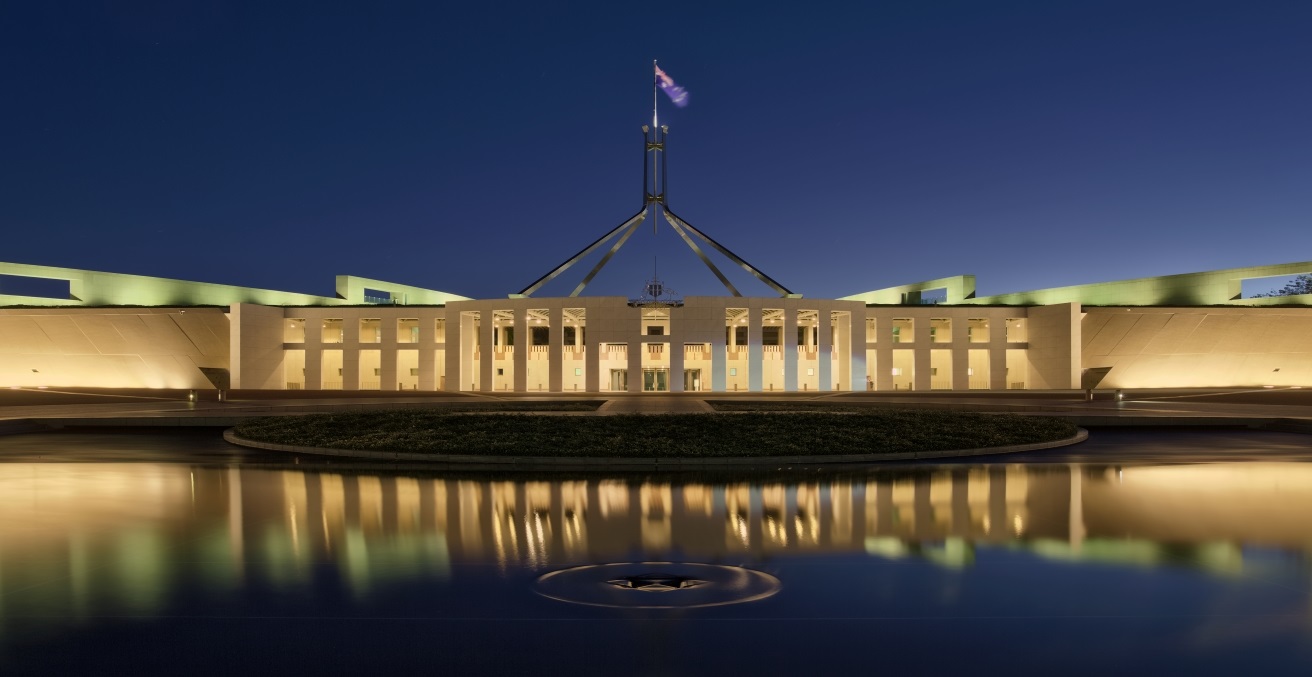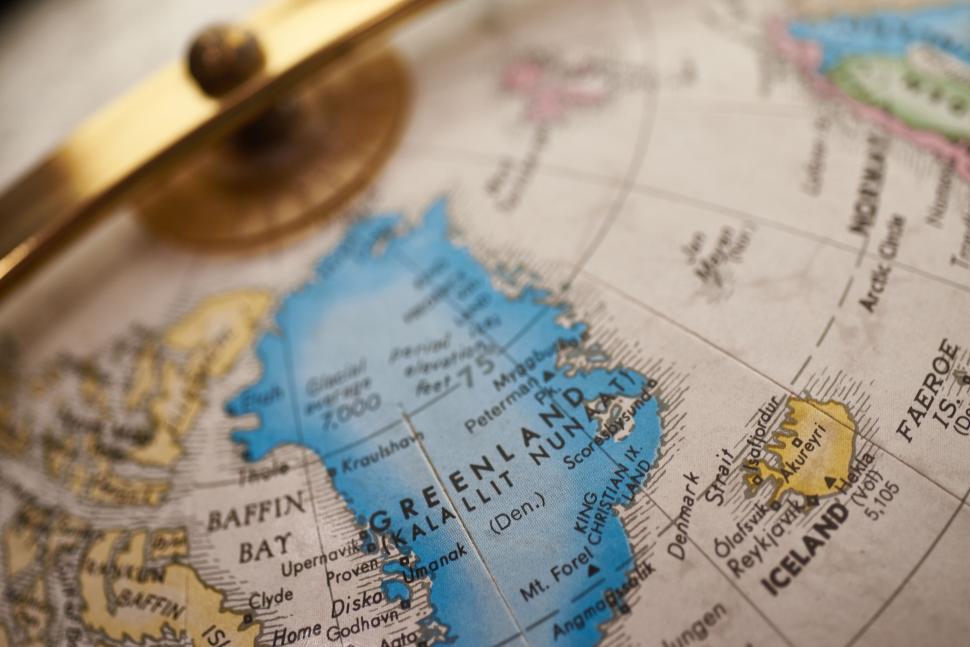
Canberra is 16,000 kilometres from Copenhagen. Australia and Denmark are globally poles apart, and yet because of their polar territories, they share much in common. The Australian Antarctic Territory represents the most significant claim to Antarctica, while Denmark’s claim over Greenland and the world’s largest island gives it a significant Arctic presence.
This makes Australia and Denmark members of an exclusive club of only 15 States with polar territory, the future of which has come under increasing scrutiny.
Australia and Denmark also have other common interests, which have been reaffirmed and deepened in recent years. Both are founding members of the United Nations, and diplomatic relations were first established in 1967 and have since “forged ever-closer bonds”. Denmark’s Queen Mary is a Tasmanian by birth, and a State visit by King Frederik and the Queen is planned for March. The two countries signed a Strategic Partnership in July 2023, which asserts “a firm commitment to universal human rights, democracy, the rights of First Nations and Indigenous peoples, … and protection of the rules and norms of international law.” Those shared values are fully encapsulated in the serious dispute arising over Greenland’s future.
In recent weeks, Donald Trump’s rhetoric about acquiring Greenland has intensified and cannot be dismissed as a social media whim. Trump has form when it comes to Greenland. Its acquisition was first raised by Trump 1.0 in 2019, but was never seriously advanced. Days before returning to the White House in January 2025, these aspirations were revived. Donald Trump Jr. was dispatched to visit Nuuk, and in March 2025, US Vice President JD Vance visited the American military base in Greenland. Talk of the US acquiring Greenland then subsided, but now, in the wake of the success of the January Venezuelan operation, it has returned to the spotlight. Trump has made clear he intends to secure Greenland “the easy way or the hard way”. Strong pushback from European allies at the recent 2026 Davos Economic Forum appeared to be a turning point for Trump’s Greenland aspirations. Threats of economic retaliation against European trade partners and of using the US military to acquire Greenland were reined in. Discussions between Trump and NATO Secretary-General Mark Rutte seemed to reassure Trump that NATO was also serious about Greenland’s security and that of the Arctic more generally. Rutte said, “We have to do more there. We have to protect the Arctic against Russian and Chinese influence. … We are working on that, making sure that, collectively, we will defend the Arctic region.” This may have satisfied the US for the time being. Still, the 2026 US National Defence Strategy, released on 23 January following Davos, and its five references to Greenland confirm that Greenland’s future is a focal point of US defence interests.
Australia has been remarkably silent on the question of Greenland’s future. No formal statements of solidarity with Denmark have been issued. Instead, during media rounds at the height of the recent furore, all Foreign Minister Penny Wong could say was “Australia’s position is very clearly that the future of Greenland is a matter for the people of Greenland and for Denmark.” Yet any US seizure of Greenland would fundamentally fracture the global rules-based international order and have profound implications globally and for Australia. First, it is unlikely NATO could survive either an economic or military attack by its most powerful member against a small, semi-autonomous majority indigenous territory that poses no threat to the US. A rupture in NATO would affect its 32 members and key NATO Global Partners, such as Australia, Japan, and Korea. The Five Eyes intelligence alliance would also be threatened. Second, the US annexation of Greenland would give China the green light to intensify its campaign to acquire Taiwan. The parallels between a nuclear superpower using its might to seize a democratic, peaceful island for national security purposes would be clear. Finally, suggestions that the Trump White House is effectively dividing the world into various hemispheric spheres of influence for China, Russia, and the US would also be reaffirmed. The November 2025 US National Security Strategy’s reference to the Nineteenth-century Monroe Doctrine and the recent National Defense Strategy, and its focus on the Western Hemisphere and the so-called “key terrain,” are keyholes into Washington’s thinking on hemispheric influence.
The 2023 Australia-Denmark Strategic Partnership states that “The changing global strategic environment challenges stability, economic prosperity, and the international rules-based order. Like-minded countries, Australia and Denmark, understand the importance of increased collaboration at the multilateral level to ensure a stable geostrategic balance that allows for a peaceful, prosperous, and secure world.” Will Australia stand up for Denmark, or is the Strategic Partnership just words on paper? Canberra has few immediate levers to pull other than deploying diplomacy. Denmark’s global partners, including Australia, need to be firm in their resolve in rejecting any US aggression. Foreign Minister Penny Wong should address these issues directly in public and with her counterparts. Australia should coordinate clear statements with like-minded counties reaffirming respect for the UN Charter, Denmark’s sovereignty over Greenland, and the rights of its indigenous peoples to determine their own future. These principles are so fundamental to the international law rules-based order that Australia would find strong support for such a statement. Other Albanese government Ministers, when engaging with US Cabinet members and White House officials, and Canberra’s departing Ambassador, Kevin Rudd with his multiple contacts throughout Washington, should prioritise making clear Australia’s firm position on Greenland and persuading Trump Administration officials to avoid any takeover of the island.
Donald R. Rothwell is Professor of International Law at the ANU School of Law, ANU, and a specialist in polar law.
This article is published under a Creative Commons License and may be republished with attribution.