This week in Australian foreign affairs: The first of four MC-55A Peregrines arrived, Mr Greg Moriarty was recommended as Australia’s next Ambassador to the United States of America, the Albanese Government accelerated efforts to develop counter-drone technology and more.
On January 24, the first of four MC-55A Peregrine – Australia’s inaugural airborne Intelligence, Surveillance, Reconnaissance and Electronic Warfare (ISREW) aircraft – arrived, marking a major milestone in strengthening the nation’s sovereign defence capability. The MC-55A is a long-range, surveillance and reconnaissance aircraft designed to deliver multiple sources of intelligence in support of Defence operations. This advanced capability reinforces Australia’s national defence posture and contributes to deterrence. Integrated within a focused and agile force, the MC-55A ensures the Royal Australian Air Force (RAAF) is ready to detect, disrupt, deter, and if necessary, defeat threats – underpinning the Australian Defence Force’s (ADF) commitment to readiness and resilience. The MC-55A will be a key component of Australia’s broader ISR enterprise, complementing platforms such as the P-8A Poseidon and MQ-4C Triton, and forming a critical link in the nation’s sovereign network of surveillance and electronic warfare assets. Operated by Number 10 Squadron, the MC-55A Peregrine will be based at RAAF Base Edinburgh, South Australia.
On January 25, the Albanese Government recommended to the Governor-General that Mr Greg Moriarty AO be Australia’s next Ambassador to the United States of America. Following the Hon Dr Kevin Rudd AC’s resignation as Australia’s Ambassador to the United States of America, MR Moriarty has been recommended to fill the now vacant position. The Prime Minister’s office has spoken highly of Mr Moriarty, praising his “unsurpassed credentials across Australia’s international policy from his senior roles in the Australian Public Service, including Secretary of the Department of Defence since 2017”. Mr Moriarty has served overseas in numerous posts, including in the Headquarters of the United States Central Command in the Persian Gulf during Operations Desert Shield and Desert Storm. Mr Moriarty has also led the Department of Defence in the development and implementation of AUKUS, making him uniquely experienced to take forward the Australia-US alliance.
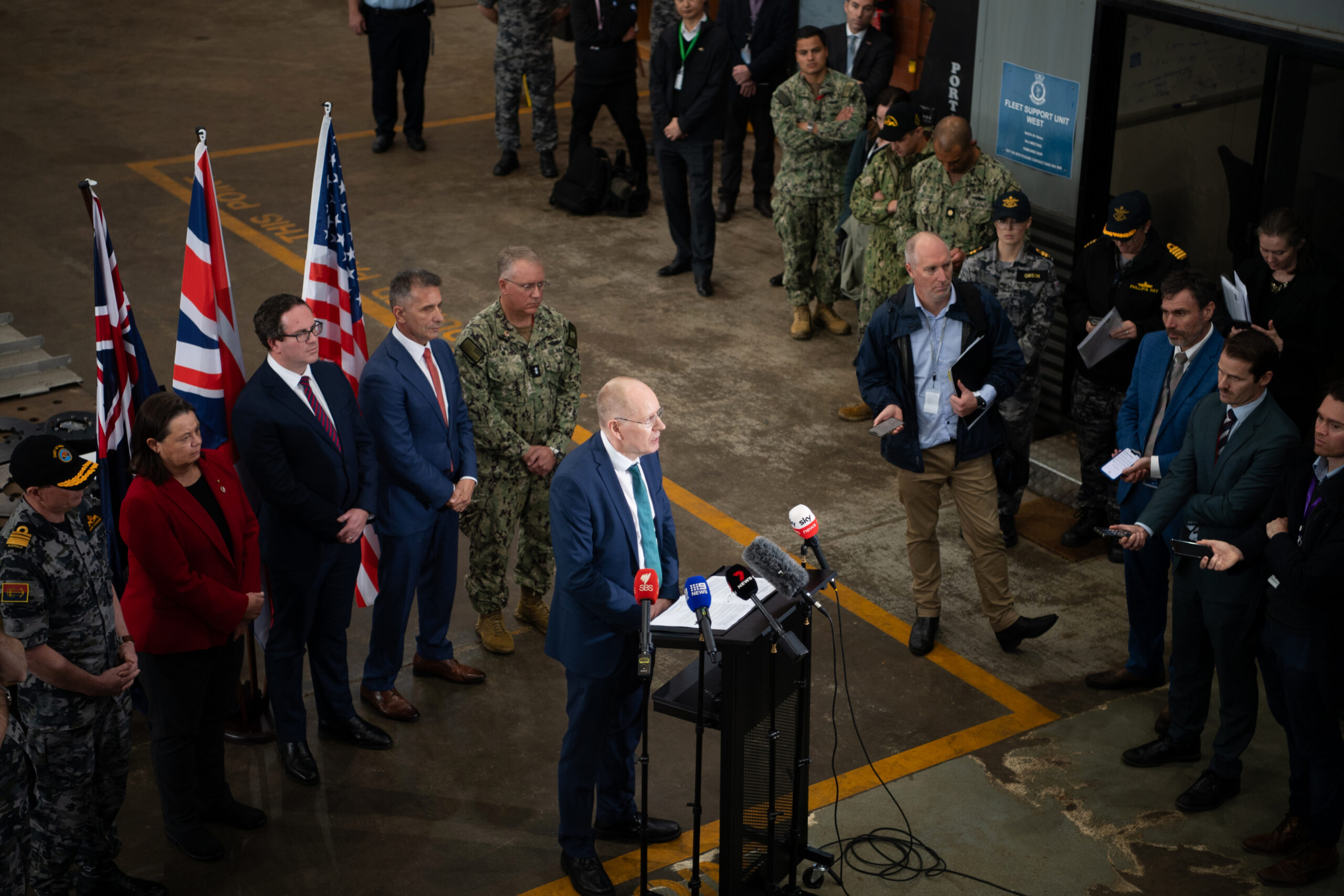
On January 26, the Albanese Government accelerated efforts to further develop counter-drone technology in an effort to strengthen Australia’s defence. While Australia already has sophisticated counter drone capabilities, these accelerated efforts aim to further Australia’s capabilities to engage with hostile drone technology using cutting-edge innovation and updated Defence regulations. The Government will partner with numerous companies within the defence industry to drive further innovation, including Anduril Australia Pty Ltd and Leidos Australia Pty Ltd. The Government will also amend regulations to give Defence authority to detect and disable or destroy drones suspected of posing a risk to Australian assets and establishments. Minister for Defence Industry Pay Convoy stated “Counter-drone technology is critical to keeping Australia safe, and that’s why the Australian Government is ensuring that Defence and other Government agencies will have access to the best technology”. Assistant Minister for Defence, Peter Khalil, echoed these sentiments, arguing that drones are quickly becoming a favoured tool for “malicious actors across the globe”.
On January 27, Senator the Hon Penny Wong and Minister for Climate Change and Energy the Hon Chris Bowen MP welcomed Solomon Islands Prime Minister Manele, Tongan Prime Minister Lord Fakafanua, Palaun President Whipps and the Secretary General of the Pacific Islands Forum (PIF) Baron Waqa to Australia for a meeting of the PIF Troika in Brisbane. The Albanese Labor Government has vowed to strengthen Australia’s commitment to backing Pacific-led climate solutions by investing $550 million into the Australian Infrastructure Financing Facility for the Pacific (AIFFP).
On January 28, Assistant Minister for Defence, Peter Khalil officially opened the new MQ-4C Triton facilities at RAAF Base Tindal in the Northern Territory. These facilities will support the Royal Australian Air Force’s MQ-4C Triton aircraft, significantly boosting Australia’s air and maritime surveillance capabilities. Delivered as part of the 355.7 million Remotely Piloted Aircraft System Facilities Project, these remote aircraft operate at higher altitudes and can remain airborne for longer than piloted crafts. These attributes will allow for greater surveillance and defence across Australia’s northern maritime borders. The new facilities strengthen the Government’s cooperation with the United States Navy, as part of the 2024 National Defence Strategy which prioritises a Strategy of Denial as one Australia’s cornerstone defence strategies. The project also aims to increase economic prosperity in the Northern Territory, including for Indigenous subcontractors. “The completion of the MQ-4C Triton facilities at RAAF Base Tindal reflects the Northern Territory’s central role in Australia’s national security. It recognises the work of our Defence personnel, the importance of our northern bases, and the strength of our local Defence industry in keeping Australians safe.” Said Special Envoy for Defence, Veteran’s Affairs & Northern Australia, Luke Gosling. Assistant Minister for Defence, Peter Khalil, emphasised that “Investing in critical infrastructure and advanced capabilities across our northern bases is critical to ensuring Australia is ready to face whatever challenges arise in the future.”
Alexandra Desailly is an intern for Australian Outlook. She holds a Bachelor of International Studies with Distinction from the University of New South Wales.
This article is published under a Creative Commons License and may be republished with attribution.